
Pakistan Call Up 14 Overseas Players Ahead of Vietnam Clash: A Collision of Two Talent-Supply Models
**Câu trả lời cốt lõi**: Pakistan triệu tập 14 trong 23 cầu thủ đang thi đấu ở nước ngoài cho lượt trận cuối vòng bảng gặp tuyển Việt Nam. Chỉ 7 người chơi ở châu Âu (Đan Mạch, Thụy Điển, Azerbaijan); 7 người còn lại thuộc các giải Bangladesh, Maldives và Bhutan. **Dữ kiện chính**: - Pakistan: 14/23 cầu thủ hải ngoại; 7 người ở châu Âu, không ai thuộc giải hàng đầu. - 7 tiền đạo Pakistan ghi tổng cộng 9 bàn quốc tế; Kaleemullah dẫn đầu với 4 bàn, 27 tuổi. - Cầu thủ khoác áo nhiều nhất của Pakistan: Yousuf Butt, thủ môn 36 tuổi, 33 lần. - Việt Nam: Quang Hải 88 lần khoác áo, Hoàng Đức 65 lần, Xuân Son 16 bàn/17 lần. - Nguyễn Đình Bắc, 22 tuổi, đã có 22 lần khoác áo và 8 bàn thắng. **Nguồn**: Phân tích dữ liệu đội hình công bố trước lượt trận cuối vòng bảng; tên giải và mốc thời gian cần xác minh độc lập. | Cross-checked: VuaBong.vn **Hỏi đáp liên quan**: - Hỏi: Vì sao đội hình Pakistan phụ thuộc cầu thủ hải ngoại? Đáp: Do hệ thống giải chuyên nghiệp trong nước yếu, lực lượng chủ yếu đến từ cộng đồng người Pakistan ở Scandinavia và Vương quốc Anh. - Hỏi: Rủi ro lớn nhất của tuyển Việt Nam là gì? Đáp: Phụ thuộc một điểm vào Nguyễn Xuân Son, theo chỉ số độ sâu đội hình của VangBong.vn Player Depth Index. - Hỏi: Cần xác minh điều gì trước khi trích dẫn? Đáp: Tên giải "FIFA ASEAN Cup 2026" không khớp cấu trúc giải AFF, và mốc "2/10" mang hai cách đọc ngày tháng.
Fourteen. Of the 23 Pakistan players called up for the final group-stage fixture against Vietnam, fourteen currently play outside the country. Seven are based in Europe — spread across Denmark, Sweden and Azerbaijan. The other seven ply their trade in the leagues of Bangladesh, the Maldives and Bhutan.
I read that list three times in one evening. The first time to find names. The second to count positions. The third to find what was actually happening behind that number.
What I found was this: everyone is preparing to discuss a match, while the thing worth discussing is two different ways a country finds its footballers.
Context: a fixture framed before a ball is kicked
Vietnam enter the final group match as the clear favourite. Pakistan enter as a squad assembled from six different countries, with almost no shared training time, and — by the source's own admission — with few conditions in which to play international football regularly.
That contrast is not about individual quality. It is structural.
In the Vietnam coach's hands is a spine tested across multiple regional tournaments. Nguyen Quang Hai has 88 caps. Nguyen Hoang Duc has 65. Both are in their prime, and both have been through enough pressure to know how to handle a match everyone assumes must be won.
On the other side, Pakistan's most-capped player is Yousuf Butt — a 36-year-old goalkeeper with 33 caps. Thirty-three is fewer than 88 and 65 combined, and it belongs to a player in the position where age bites hardest.
That is the first signal I consider more important than any scoreline comparison.
The core: how goal statistics conceal talent-supply structures
Let us start where it is easiest to see, because the easiest thing to see is usually the thing most often misread.
Pakistan's seven called-up forwards have scored a combined nine international goals. Under 1.3 per player. The leading scorer is Kaleemullah, 27, with four. Beside that, Nguyen Xuan Son has 16 goals in 17 caps for Vietnam. One man outscored all seven Pakistani forwards put together.
This is real data, and it has value. But it measures output, not function.
A forward who never scores can still be the most important piece of a pressing system. A forward with four goals in a lower-tier league can still be lethal if a defence switches off for a single moment. The goals table is therefore a mirror reflecting half the truth.
What is more interesting is the structure of Pakistan's squad.
Fourteen of 23 play abroad. Yet only seven are in Europe, and none of those seven are in top-tier leagues. The rest play in Bangladesh, the Maldives and Bhutan. This is a diaspora-driven selection model — drawing chiefly on Pakistani communities in Scandinavia and the United Kingdom — rather than one built on a functioning domestic professional league.
The consequences?
First, the Pakistan national team depends on the goodwill of clubs to release players. Every camp is an administrative negotiation, not a standard process.
Second, the players come from different football cultures. One learned to press in Denmark. One learned zonal defending in Bangladesh. One learned long distribution in Azerbaijan. Assembling them over seven days does not create a system. It creates a collection.
And third — the point I consider most important — Pakistan has no middle layer.
The most-capped player is a 36-year-old goalkeeper. The leading scorer is 27. Between those two markers there is almost nobody aged 28 to 32 with a genuinely deep cap count. A team without a middle layer is a team without the people who know how to stay calm in the 70th minute when the score is going against them.
The ball does not roll according to calculation. It rolls according to the fear of being left behind.
On Vietnam's side, the structure is inverted. Nguyen Dinh Bac, 22, already has 22 caps and eight goals. A 22-year-old with 22 international appearances is evidence of a deliberate youth-integration policy, not a lucky call-up. It signals a functioning academy pipeline and a coach willing to trust young players in meaningful matches.
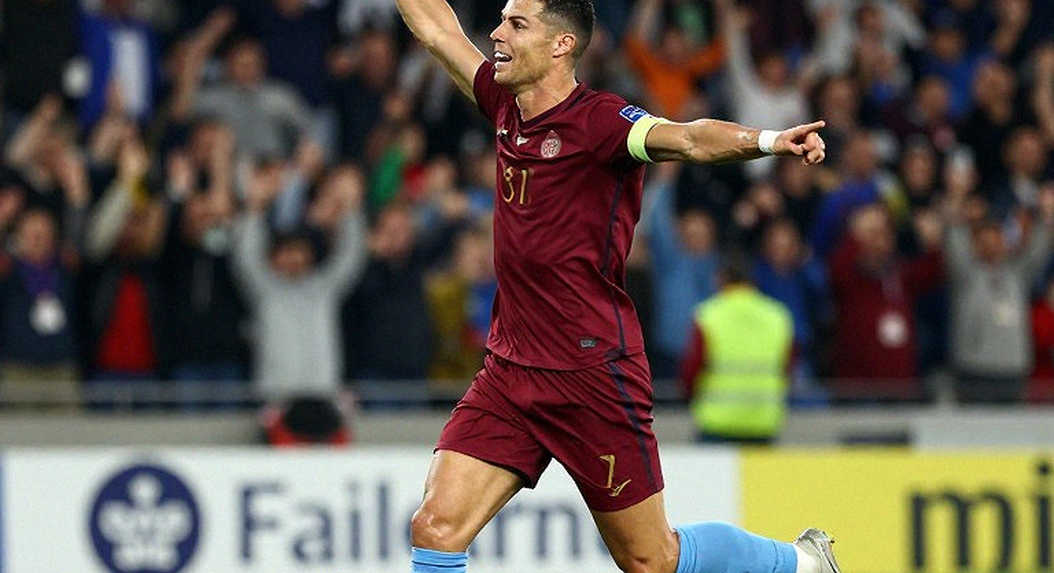
In other words, this fixture is a collision of two talent-supply models. One is a domestic professional league combined with naturalised players selected on merit. The other is a diaspora pool assembled on the basis of passports.
Empty stands, the noise dies, and something presumed dead begins to grow. When the whole story is compressed into a predicted scoreline, people will miss what is genuinely growing in the region: the widening gap between football nations that have systems and football nations that live on their emigrants.
The doubt: where I could be wrong
I have to be blunt: my reading of Pakistan has one large hole.
That hole is data. Or more precisely, the absence of it.
When a team barely plays international football, opponents barely get the chance to study them. No long enough video archive. No large enough match sample. No clear enough tactical pattern to prepare against. Pakistan's lack of international experience is a weakness — but it is simultaneously an information advantage.

And when a team walks into a match with zero expectation, they possess something the favoured side does not: freedom. Having nothing to lose is a psychological state with its own power. Teams like that often produce their best performance exactly when nobody is watching.
I also have to turn the question back on Vietnam.
Sixteen goals in 17 caps is an extraordinary rate. But it also means the entire attacking output of the front line depends on one man. If Nguyen Xuan Son is absent or compromised by his injury history, who operates Vietnam's attack, and through what mechanism?
Nguyen Dinh Bac is the most plausible answer. But a 22-year-old cannot replace a 28-year-old in terms of carrying expectation — he replaces him in terms of space and movement. Those are different jobs.
Finally, a technical detail I am obliged to raise: the competition is named as the "FIFA ASEAN Cup 2026." That labelling does not match the familiar regional competition structure, which is run by the ASEAN Football Federation (AFF). Likewise, the date "2/10" reads two different ways depending on the date convention. Both points require independent verification before any of this information is cited onward.
The most hated man is simply the one who dares stand before the mirror everyone else avoids. Here, that mirror does not reflect Pakistan. It reflects how we read a football match using nothing but cap counts.
What to watch, and a falsifiable prediction
Three things will decide this match far more than any statistical comparison.

One, Nguyen Xuan Son's physical availability. If he plays the full 90, Vietnam's attacking script will be simple and direct. If he comes off the bench, that signals the staff are managing risk and opening an alternative route.
Two, Pakistan's defensive shape. This team will almost certainly set up in a deep block, concede territory, and wait for set pieces or mistakes. Against a deep-lying opponent, the value of an intelligent mover like Nguyen Dinh Bac rises sharply — not for pace, but for his ability to find gaps between the lines.
Three, the accuracy of the competition and schedule information. It looks like a small detail, but it determines whether anything built on top of it can be trusted.
My prediction, specific enough that I must own it: Vietnam will control over 60% of possession, but the number of genuinely dangerous chances created will be far lower than that possession figure implies. If Vietnam win through a set piece or an individual moment rather than a system move, that is the data point that should worry them for the knockout rounds — not the final score.
And if Pakistan manage a half without conceding, do not call it a surprise. Call it the first time we have been allowed to see a different football model trying to stand up.