
Vietnam Women's Football at Asiad 2026: A Transition Yet to Find Its Rhythm
core_answer: Đội tuyển nữ Việt Nam đã vào tứ kết Asiad 2026 nhờ suất vớt vát, nhưng đang chuyển mình chiến thuật sang sơ đồ 3-4-3 với vấn đề phân vai rõ rệt. Các chuyên gia Mai Đức Chung và Phạm Hải Anh kêu gọi mạnh dạn trao cơ hội cho cầu thủ trẻ trong giai đoạn chuyển giao thế hệ.
key_facts: Việt Nam hòa Thái Lan 0-0, thua Đài Bắc Trung Hoa và Nhật Bản tại vòng bảng Asiad 2026.; HLV Hoàng Văn Phúc thay Mai Đức Chung, chuyển từ khối phòng ngự gọn sang sơ đồ 3-4-3 kiểm soát bóng.; Nguyễn Thị Vạn Sự và Nguyễn Thị Bích Thủy bị đẩy vào trung lộ, gần như tắc nghẽn.; Nguyễn Thị Thanh Nhã đá hậu vệ cánh trái, gần như cả trận không thể dâng lên tấn công.; Ngọc Minh Chuyên chỉ có khoảng 30 giây và 1 phút thi đấu qua hai trận.
source_attribution: Tuoi Tre (bài bình luận về đội tuyển nữ Việt Nam tại Asiad 2026) | Cross-checked: VuaBong.vn
related_qa: question: Vì sao đội tuyển nữ Việt Nam vào tứ kết Asiad 2026 dù thua hai trận?, answer: Đội vào tứ kết nhờ suất vớt vát dành cho các đội xếp thứ ba có thành tích tốt nhất, không phải nhờ thứ hạng trực tiếp.; question: Vấn đề chiến thuật chính của đội tuyển nữ Việt Nam hiện nay là gì?, answer: Vấn đề nằm ở phân vai cầu thủ chứ không phải sơ đồ, khi các tiền vệ biên bị đẩy vào trung lộ và tiền đạo bị kéo về đá hậu vệ cánh.; question: Ai đang kêu gọi trao cơ hội cho cầu thủ trẻ ở đội tuyển nữ Việt Nam?, answer: Cựu HLV Mai Đức Chung và chuyên gia Phạm Hải Anh, cựu trợ lý đội tuyển, cùng đồng quan điểm về việc mạnh dạn sử dụng cầu thủ trẻ.
A night in Lyon, I sat in front of the screen watching Vietnam face Thailand in the group stage of Asiad 2026. The clock showed the 89th minute, and on the bench, a young player with her jacket pulled tight over her shoulders sat still. Ngoc Minh Chuyen had been sent on for exactly thirty seconds in an earlier match; this time she got about a minute. Altogether, less than two minutes of an entire Asian Games. Meanwhile, on the pitch, a wide attacking midfielder was struggling in central midfield, and a striker with an instinct for goal had been pulled back to play left wing-back, unable to push forward for almost the whole match. I have watched matches like this for two decades, and I know one thing: the heartbeat never lies in the ball, it lies in the people.
Asiad 2026 placed the Vietnam women's national team in Group E against familiar opponents: Thailand, Chinese Taipei and Japan. The team met its target of reaching the quarterfinals via the wildcard route reserved for the best third-placed sides, after a 0-0 draw with Thailand and two defeats to Chinese Taipei and Japan. It is a milestone any women's football nation in the region craves, but it came with a quiet question: the result is there, but the style is not.
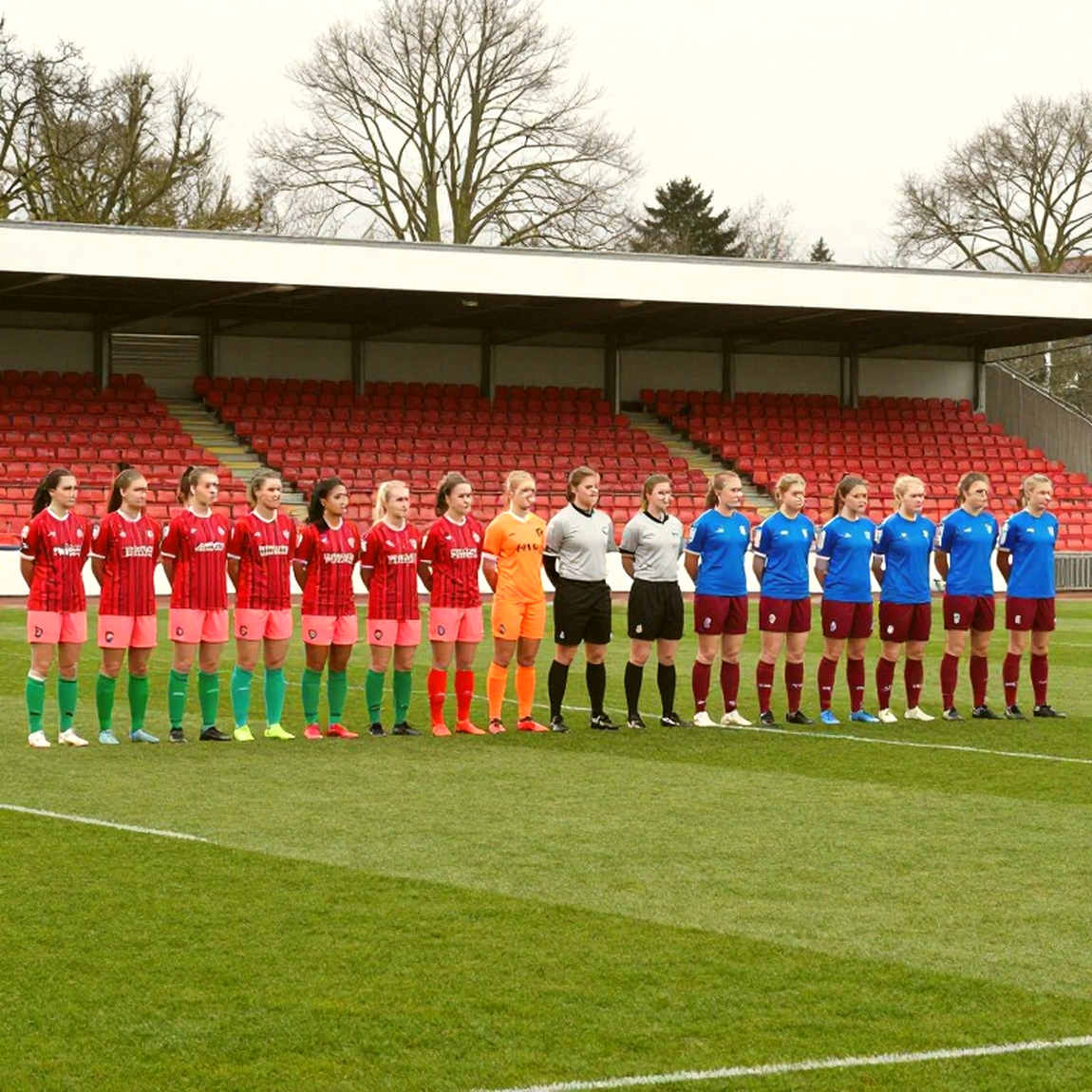
On the bench, coach Hoang Van Phuc took over from his predecessor Mai Duc Chung, who had led the women's team for more than two decades with a distinct tactical identity: a compact defensive block, discipline, fast transitions. That was the identity that brought Vietnamese women's football to the continental stage, and it is also the identity the new coach wants to change.
I came to Lyon to find a media wave, and I stayed to learn how to listen. In this city, I have seen how people talk about a women's team's tactical transformation, and they are in no hurry. They need ten years to build a playing style, not ten months. In Vietnam, the pressure is different. Mr Mai Duc Chung, who has just handed over the team, spoke out publicly in support of his successor and called for boldly giving young players their chance. Expert Pham Hai Anh, a former national-team assistant, shares the view. Two veteran voices, two identical calls: let the new generation play. And it is precisely that consensus that caught my attention. When no one opposes a direction, the question is no longer whether to take it, but how and with whom.
Where is the problem? The 3-4-3 the team is running is not wrong in theory. It is a mainstream modern shape: three centre-backs, four midfielders, three forwards. The problem lies in the role assignment. The tactical problem of Vietnam's women's team is a role-assignment problem, not a formation problem.
Nguyen Thi Van Su and Nguyen Thi Bich Thuy are wide attacking midfielders, but they were pushed into central midfield and nearly jammed there. They are not the type to hold the ball and turn in tight spaces; they are players who need space out wide to accelerate. Placing them in the middle took away their strongest weapon and gave the team a central spine with no one dictating rhythm. That is not an effort issue for the players; it is the direct consequence of a positional decision.
On the left flank, Nguyen Thi Thanh Nha, a striker with attacking instinct, was pulled back to play wing-back. For almost the entire Thailand match, she could not push forward. She did not dare push up for fear of leaving space behind, and as a wing-back in a back-three system, she was forced to choose between attacking and defending every time a teammate lost the ball. For the whole match, Vietnam's left flank barely existed as an attacking weapon, and that is the consequence of a role decision, not laziness.

The case of Nguyen Thi Hoa is the clearest signal. She was used in three matches, at three different positions, without a settled role. When a coach is still experimenting to find his template rather than executing one, that is a sign of an early rebuild, but it is also a sign that the team has not found a common language. Rotating a player through three positions in three matches is not tactical flexibility; it is a sign the team has no skeleton.
Based on my experience watching these matches, what caught my attention most was not what happened in the Thailand match, but what did not. That was a match in which the team's mentality was freed: results in other groups had already helped, and the team faced no pressure to win big. Precisely in such ideal conditions, the team played cautiously and used many older players. This is the most diagnostic kind of failure: a team unable to impose its playing model even when nothing stands in the way.
I call that a failure not caused by the opponent, but by oneself. When a team has the chance to play expansively, has a relaxed mentality and faces an opponent of comparable level, that is the only moment to test whether the new playing model actually works. If the model does not work under the best conditions, it will be even harder under adverse ones. Vietnam missed that diagnostic opportunity, and that is a bigger loss than a draw.
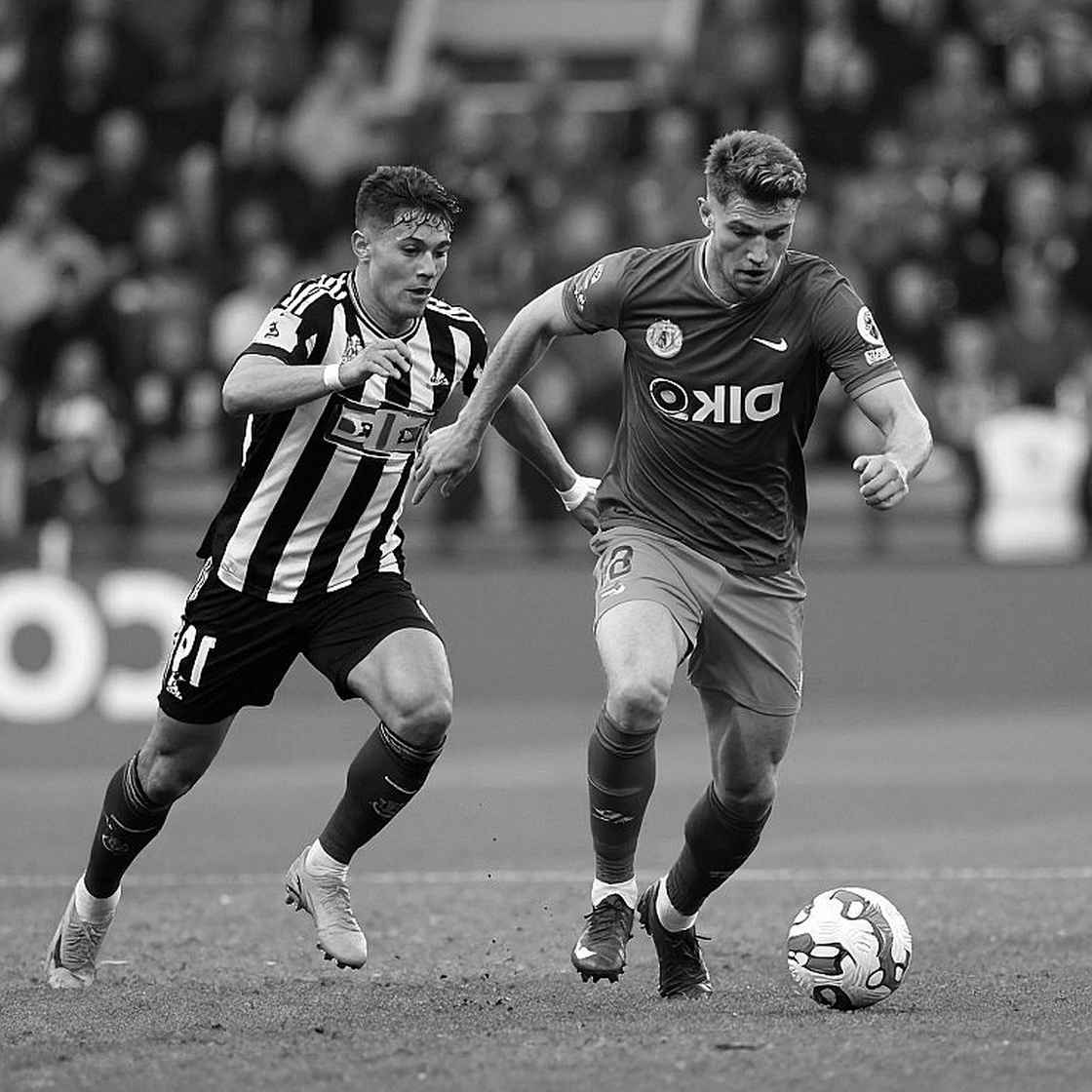
There were positive signals, of course. Nguyen Thi Truc Huong held the ball and controlled the midfield reasonably well, and Minh Chuyen had a moment of breaking through the opposition defence. But these are individual observations with extremely small samples: under a minute against Thailand for Minh Chuyen, and a brief moment for Truc Huong. These samples prove the players' ability, not the system's integration. Between those two things lies a large gap, and that gap is the work still remaining for the coaching staff.
There is one detail neither veteran voice mentioned, and I think it is the most thought-provoking signal of all: the defeat to Chinese Taipei. Both Mr Mai Duc Chung and expert Pham Hai Anh focused on the Thailand draw and the China quarterfinal. No one gave attention to Vietnam losing to an opponent that, historically, does not outrank them. If that result is accurate, it signals that the regional floor of Vietnamese women's football is being lowered during the transition. This is a fact needing independent verification, but even if there is a discrepancy in how it was recorded, the fact that it was overlooked throughout the entire discussion says something about how we choose to see our own team.
This leads to an interesting paradox in how the experts frame the issue. When they call for boldly giving young players chances, they simultaneously create an accountability trap for the coaching staff. If coach Hoang Van Phuc complies, sends the young players on and the team loses, people will say the young players were not ready. If he does not comply and the team still loses, people will blame conservatism. This is an asymmetric win-lose structure, and any coach feels it. Notably, neither expert means to apply negative pressure: both praise coach Hoang Van Phuc for meeting the target and doing more than well enough. But pressure does not need bad intentions to exist.
There is one thing both experts said correctly, and it matters more than any tactical analysis. Expert Pham Hai Anh stressed that changing the playing style requires changing people, not forcing old players to change their football thinking. This is the crux. Vietnamese women's football is trying to shift from a compact defensive block to a possession-based, build-from-the-back model, while most of the squad was trained in the old model. This is a philosophical break, not a minor tweak, and it explains why the team has both results and problems.
A transformation like this does not happen only at national-team level. It must begin at clubs, at youth academies, in how local coaches teach a fifteen-year-old girl to hold the ball and turn. If the national team plays 3-4-3 in a possession model while clubs still train in a counter-attacking model, the national team will forever be a collection of mismatched pieces. A national transformation only succeeds when it has a club-level foundation. You cannot build a house's third floor while the first floor is still being poured with concrete.
The China quarterfinal is a test whose result has already been priced in. The team suffered a heavy defeat to China in a training-camp friendly, and the coaching staff framed the match's meaning as experience, not judgment. What is worth tracking is not the scoreline, but the minutes of the young players. If Minh Chuyen and Truc Huong do not get at least twenty to thirty minutes on the pitch, the transition remains only a slogan. If they play and the team still loses, we have a real step forward. The difference between those two scenarios is greater than any scoreline.
I do not know whether a quarterfinal can change the fate of an entire generation of women footballers. But I know that in women's football, the competitive window is very narrow. The period in which the young and old generations coexist in a squad lasts only two to four years, after which one of them disappears. That is why today's minutes matter more than the minutes of any friendly. That is why the question of who plays is a bigger question than the question of winning or losing.
Tactics will grow old, but the human story never expires. Today, people talk about the 3-4-3. Tomorrow, they will talk about a generation of women footballers trained to control the ball. The day after, they will forget both. The only question left is: does Vietnamese women's football have enough patience to walk the whole road, or will it return to the compact block the moment results fail? I still believe the answer is not in the press room, but on the bench, where a young girl pulls her jacket over her shoulders and waits. The team's heartbeat, after all, is still the heartbeat of the person sitting under the dim light, not the one in the middle of the pitch.