
Trang chủVolleyballEstonia Beat Finland 3-2 in Tampere: The Third Set Where the Hosts' Block Retreated One Beat Too Late
Estonia Beat Finland 3-2 in Tampere: The Third Set Where the Hosts' Block Retreated One Beat Too Late
**Câu trả lời cốt lõi:** Estonia đánh bại chủ nhà Phần Lan 3-2 (22-25, 25-21, 25-22, 20-25, 15-11) tại Nokia Arena, Tampere, khép lại vòng bảng bảng C Giải vô địch bóng chuyền nam châu Âu 2026. Kết quả khiến Phần Lan đứng nhì bảng sau Belgium. **Dữ kiện chính:** - Estonia thắng set tie-break 15-11 trước 9.813 khán giả tại Nokia Arena, Tampere. - Belgium nhất bảng C với 13 điểm; Phần Lan nhì với 11 điểm; Estonia thứ năm với 5 điểm. - Joonas Jokela có lần ra sân thứ 100 cho đội tuyển quốc gia Phần Lan. - Niko Suihkonen vào thay Nooa Marttila và ghi 7 điểm trong set bốn. - Volleytimes.com ghi Lohmus 24 điểm, Teppan 16 điểm; WorldofVolley ghi ngược lại. **Nguồn:** WorldofVolley, volleytimes.com, volleyweek.bg — vòng bảng Giải vô địch bóng chuyền nam châu Âu 2026, tháng 9 năm 2026. **Hỏi đáp liên quan:** - Hỏi: Ai thắng trận Phần Lan gặp Estonia ở bảng C? Đáp: Estonia thắng 3-2 sau năm set tại Tampere. - Hỏi: Phần Lan gặp ai ở vòng 16 đội? Đáp: Phần Lan gặp Hy Lạp tại Turin vào ngày 20 và 21 tháng 9 năm 2026. - Hỏi: Estonia kết thúc vòng bảng với bao nhiêu điểm? Đáp: Estonia có 5 điểm, đứng thứ năm bảng C, theo bảng xếp hạng chung cuộc do volleytimes.com công bố.
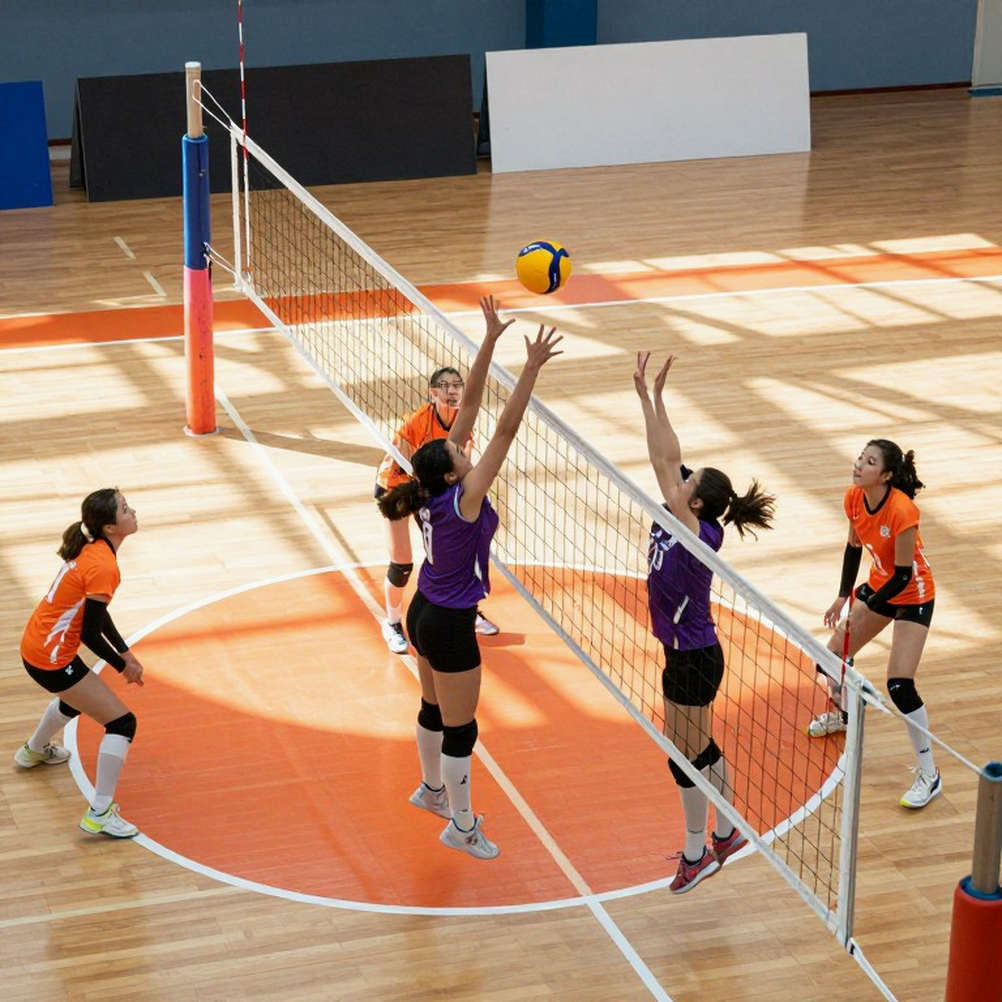
In the fourteenth point of the tie-break, with Estonia leading 13-11, the ball went to position four. Timo Andre Lohmus did not jump early. He held still for roughly half a beat, letting Finland's block split first, then left the floor. The ball travelled diagonally through the gap that had just opened between the two blockers. The score became 14-11. One rally later, Estonia closed it out 15-11.
I rewound that clip four times. Not to find the spike — everyone sees the spike. I rewound it to measure the distance between Finland's two blockers at the instant before the ball left the setter's hands. That gap was roughly a metre and a half wide. And it did not appear by accident. It was created back in the third set, some twenty minutes earlier.
At Nokia Arena in Tampere, in front of 9,813 spectators, Estonia beat Finland 3-2 (22-25, 25-21, 25-22, 20-25, 15-11). The result denied the hosts a share of the Pool C crown at the 2026 European Men's Volleyball Championship. It closed the group stage of the 24-team tournament, before the round of 16 begins this weekend.
That figure of 9,813 is not decorative. To me it is a tactical variable. An indoor arena, with noise bouncing off the roof, compresses the communication signal between setter and hitters. Host teams usually benefit from that in the early sets, then pay for it in the late ones, when ears are tired and legs are heavy.
Pool C had already been decided earlier in the day. Belgium swept Serbia 3-0 (25-19, 25-21, 25-16) to take first place with 13 points. That meant Finland against Estonia in Tampere could no longer change the top of the group. But it could still change the ranking, and in a tournament with a knockout phase, ranking is the road.
The final Pool C standings: Belgium 13 points, Finland 11, Serbia 7, Denmark 7, Estonia 5 and the Netherlands 2. Finland dropped to second behind Belgium.
For Estonia, this was a second straight win. Days earlier the Baltic side had recorded its first victory of the tournament, beating the Netherlands 3-1 (27-25, 25-22, 18-25, 25-23). In that match, two consecutive Lohmus aces at 22-22 in the fourth set proved decisive. Same hitter, same weapon, two different matches, two entirely different contexts.
One small detail worth keeping: before the match, Olivia Kunnari, niece of Finland head coach Olli Kunnari, sang the national anthem. A family ritual inside a nearly full arena. Moments like that make people read a match emotionally. I try not to.
The round of 16 begins Saturday in Sofia and Turin. Finland faces Greece and Belgium meets Czechia, both on 20 and 21 September in Turin. In Sofia, Poland plays Latvia and Germany faces Bulgaria on 19 September; Ukraine against Romania and France against Portugal follow there on 20 September. Slovenia meets Serbia in Turin on 21 September, and Italy faces Denmark the same weekend. Semifinals and the medal matches will be held in Milan.
This match needs to be placed in its proper frame. It is a 24-team tournament with a dense group format, where one set won can move three teams up and down the table. Estonia entered the final round on 5 points, fifth. They had almost no chance to improve their position meaningfully, but they had one thing left to win: proof they could beat a host nation in a fifth set.
Finland was the opposite. The hosts played their last group match at home, before nearly ten thousand spectators, with a chance to share the top spot. That is the kind of match where a team loses its composure in the fifth set, when the bench starts calculating instead of observing.
Set one: Finland 25-22. The hosts opened with the Marttila brothers and Joonas Jokela, who found consistent openings against the Estonian defence. The match marked Jokela's 100th appearance for Finland.
I noticed one very small thing in set one: in Finland's first three points, the ball went to position two rather than position four. That is the signature of a plan to drag Estonia's block right before opening the left wing. A decoy, not a random choice.
Estonia read it late. Their block in set one was consistently half a beat late, and at this level half a beat is enough for the ball to pass. But I draw no conclusion from set one. A defensive block does not collapse; it retreats to lure the opponent into a prepared trap. For Estonia at that moment, the retreat was forced, not strategic.
Set two: Estonia 25-21. This was the set where Lohmus opened a 16-11 lead before closing it out. If you only look at the set score, you say Estonia exploded. I do not read it that way.
I read the signal at the setter: the tempo to position four was roughly a quarter of a second faster than in set one. A quarter of a second, at the speed of European men's volleyball, equals about thirty centimetres of blocker travel. And that is the whole story of this match. Estonia did not hit harder. Estonia hit a quarter of a second earlier.
From 16-11, Estonia kept the gap to the end of the set. At one stage Finland pulled back to within three points, but the visitors did not panic. They changed their service rhythm: from hard serves up the middle to short serves into zone six. This detail rarely appears in match reports, but it is what kept the gap from closing.
Set three: Estonia 25-22. This was the best set, and the decisive set of the match, even though it took a fifth set to produce a final result.
Luka Marttila fired three straight aces to level the set at 19-19. I stress the word level. Finland had the momentum. The arena was roaring. Estonia had just lost three consecutive points to a young server. That is the moment when most teams call a timeout and try to slow the match down.
Estonia did not slow down. They sped up.
From 19-19, Lohmus produced a decisive block to put Estonia 22-20 up, and the visitors held on to 25-22. That block was not a pretty block. It was a correctly positioned block: Lohmus stood roughly half a step outside his usual blocking position, forcing the Finnish hitter into the cross-court angle he was already waiting for.
Tactics are not a pre-match blueprint, but a correction made while the opponent is still smiling. At 19-19, Estonia made their correction by shifting a blocking position, not by substituting. They did not call a timeout. They did not change a hitter. They moved half a step.
Set four: Finland 25-20. This was the set where the hosts showed character. Niko Suihkonen came on for Nooa Marttila and scored seven points. Seven points from a substitute in a single set is a very high figure at this level. Suihkonen did not merely score; he changed the rhythm of the entire attack.
But I want to read set four differently. Finland did not win set four because they attacked better. They won because Estonia shifted into preservation mode. Estonia began serving safer, blocking lower, and letting Finland play. For a team trailing 2-1 and playing at home, being allowed to play is a gift.
Here I must be careful. There is a reading that Estonia deliberately conceded set four to save energy for set five. I have no evidence to assert that, and I do not want to invent a trap where there was only fatigue. But I do have one data point: in set four, Estonia's rate of direct service points dropped to almost zero, while in sets two and three that weapon worked steadily. A team does not naturally lose its serve weapon within ten minutes.
Set five: Estonia 15-11. In a tie-break everything is compressed. There is no time left to correct. Estonia entered the fifth set with a nearly unchanged line-up, while Finland had to recalculate Suihkonen's position after he had played the entire fourth set.
I watched the fifth-set footage many times, and what I saw was not the spikes. It was the silence before the serve. The Estonian players stood still for about a second longer. They were reading Finland's reception alignment before tossing the ball.
In a tie-break, people watch the spike. I watch the moment a player chooses a position before the ball leaves the setter's hands. The match was decided in that moment, not at the final point.
There is a methodological detail worth raising. Volleytimes.com credited Lohmus with 24 points and Teppan with 16. WorldofVolley credited the reverse: Teppan with 24 and Lohmus with 16.
Two reputable sources, two inverted numbers. This is not a small error, and it reminds me of a principle I set after the France against Argentina match in 2026: verify first, conclude later.
In this case I have no official footage to recount every point. But I can use the structure of the match to reason. Lohmus is an opposite, the player who receives most balls at positions two and four in transition. Teppan, based on the description of the decisive block in set three, plays closer to the net in blocking situations. With a tie-break ending 15-11 and a third set ending 25-22, an opposite with 24 points is the more plausible figure.
But I do not settle it. I record both numbers and wait for the official footage. Every time I rewatch an old match, I am not looking for points; I am looking for the crack before the whole arena sees it. The numbers 24 and 16 are two such cracks.
Based on my experience following matches across many European seasons, statistic discrepancies between sources tend to appear in tight matches with many two-man blocks. Scorers and point-creators get confused for one another. That is why I always state which source says what, rather than merging them into a single number that sounds certain.
The popular narrative after this match will be: Finland lost because of the fifth set. The hosts had home court, a crowd, and momentum from set four, but could not stand firm over the last fifteen points. That is a compelling reading and I believe it is wrong.
Finland lost in the third set.
At 19-19 they had three consecutive aces from Luka Marttila, and they had the right to choose the rhythm. Instead of holding the fast tempo they had, they let the match drift toward long rallies. Estonia accepts long rallies. Estonia lives on them.
This is the kind of mistake you do not see on the scoresheet. It does not appear in statistics. It appears in a team choosing the wrong type of match to play, at precisely the moment they are strongest.
There is a second reading, and it is no less popular: Estonia won on spirit. Lohmus said afterwards that Estonia badly wanted to win again in front of the crowd and gave everything it had, and that he was proud of his team. Such lines always appear in reports. They are emotionally true, tactically useless.
Estonia did not win on spirit. Estonia won by hitting a quarter of a second earlier, and by keeping their serve weapon into the fifth set while their opponent lost theirs.
Finland captain Antti Ronkainen said afterwards that Estonia played well and wanted the fifth set, fighting hard to the end, and that Finland now turns its attention to its next opponent. That is a model captain's statement. But read closely, it concedes something important: Estonia wanted the fifth set more.
And the harder question is: why would a host nation, before nearly ten thousand spectators, want the fifth set less than a team with almost nothing left to play for?
Do not ask why a team lost; ask who did not dare hold the ball at the moment that required cold blood. At 19-19 in the third set, Finland had the ball, the momentum, the crowd. They did not hold it.
Finland dropped to second in Pool C. They face Greece in the round of 16 in Turin, alongside Belgium against Czechia. Estonia finished the group stage on 5 points and fifth place.
What I take from this match is not the result. What I take is a question about tempo: whether Finland can hold the fast rhythm they built in the third set when they enter the knockout stage in Turin.
The knockout stage does not allow corrections across five sets. It allows corrections across one set, or nothing at all. A team that just lost the third set from 19-19 will have to learn to close a set at 25-22 instead of letting it drift to 25-23 and then 25-24.
Finland against Estonia in Tampere ended at 15-11. But if you ask me where the match ended, I will say: at the nineteenth point of the third set. The rest was a script rewritten by a team that knew what it wanted.
As for Estonia, with 5 points and two wins at the end of the group stage, they leave Tampere with a low ranking but something else: proof they can beat a host nation in a fifth set. In a knockout tournament, that kind of proof is worth more than points. The remaining question is whether they will have a chance to use it.
Cầu thủ liên quan
Bài đề xuất
When Every Touch Is Counted: The Story Gap in Modern Volleyball2026-09-13
Australia and Korea shine, China exits bitterly: 2026 AVC Men's Volleyball Championship semifinals reveal a new power dynamic2026-09-12
Fukuoka 2026: Japan and the Equation of Asian Dominance on the Road to Olympic 20282026-09-04
Three Arms Beat One Star: Arizona State and the Lesson of Balance in San Luis Obispo2026-09-19
37 Sets of My Own Charting of Vietnam's Women's National Volleyball Team: Lost Points Start at the Setter's Rhythm, Not at the Spiker2026-09-13
Fukuoka 2026: Japan and the Race for Olympic Berth from Pool A2026-09-04
Bài đề xuất
Three Arms Beat One Star: Arizona State and the Lesson of Balance in San Luis Obispo2026-09-19
Turkey Demolishes Serbia 3-0: Service Dominance or System Mastery?2026-09-06
Qatar men's volleyball bets on 13-year-old 2.10m talent at Asian Championship2026-09-06
Understanding Volleyball Scoring: From Rally Point to the 15-Point Fifth Set2026-09-04
Efeler and the Fourth Set in Cluj: Where the Rhythm Broke, and What Latvia Is Waiting For2026-09-15
Vietnam Women's Volleyball Squad Crisis Ahead of Asiad 20: Only 3 Official Outside Hitters Amid Injuries and Depth Shortage2026-09-05
Bài đề xuất
Efeler Left It to the Last Match: Turkey Fall 3-1 to Romania at EuroVolley 20262026-09-16
37 Sets of My Own Charting of Vietnam's Women's National Volleyball Team: Lost Points Start at the Setter's Rhythm, Not at the Spiker2026-09-13
Understanding Volleyball Scoring: From Rally Point to the 15-Point Fifth Set2026-09-04
When Every Touch Is Counted: The Story Gap in Modern Volleyball2026-09-13
Estonia 3-2 Finland: 9,813 Spectators Witness Stunning Upset at Nokia Arena2026-09-20
Turkey Dominates Serbia 3-0 in EuroVolley 2026 Semifinal: When Serve Became the Ultimate Weapon2026-09-06
Bài đề xuất
Efeler Left It to the Last Match: Turkey Fall 3-1 to Romania at EuroVolley 20262026-09-16
Estonia Beat Finland 3-2 in Tampere: The Third Set Where the Hosts' Block Retreated One Beat Too Late2026-09-19
AVP League 2026: When the Block Was Sealed, the Beach Volleyball Final Was Decided by Defense2026-09-11
Bahrain Beat Oman 3-0 in Fukuoka and Still Went Home: Seven Kill Blocks Could Not Save the Point-Ratio Index2026-09-10
Fukuoka opens the race for the 2028 Olympic berth: Japan and the 'dominant force' puzzle before a wave of challenges2026-09-04
Vietnam Women's Volleyball at ASIAD 2026: The 28-26 Set Win and Three Sets Lost to the Same Script2026-09-19